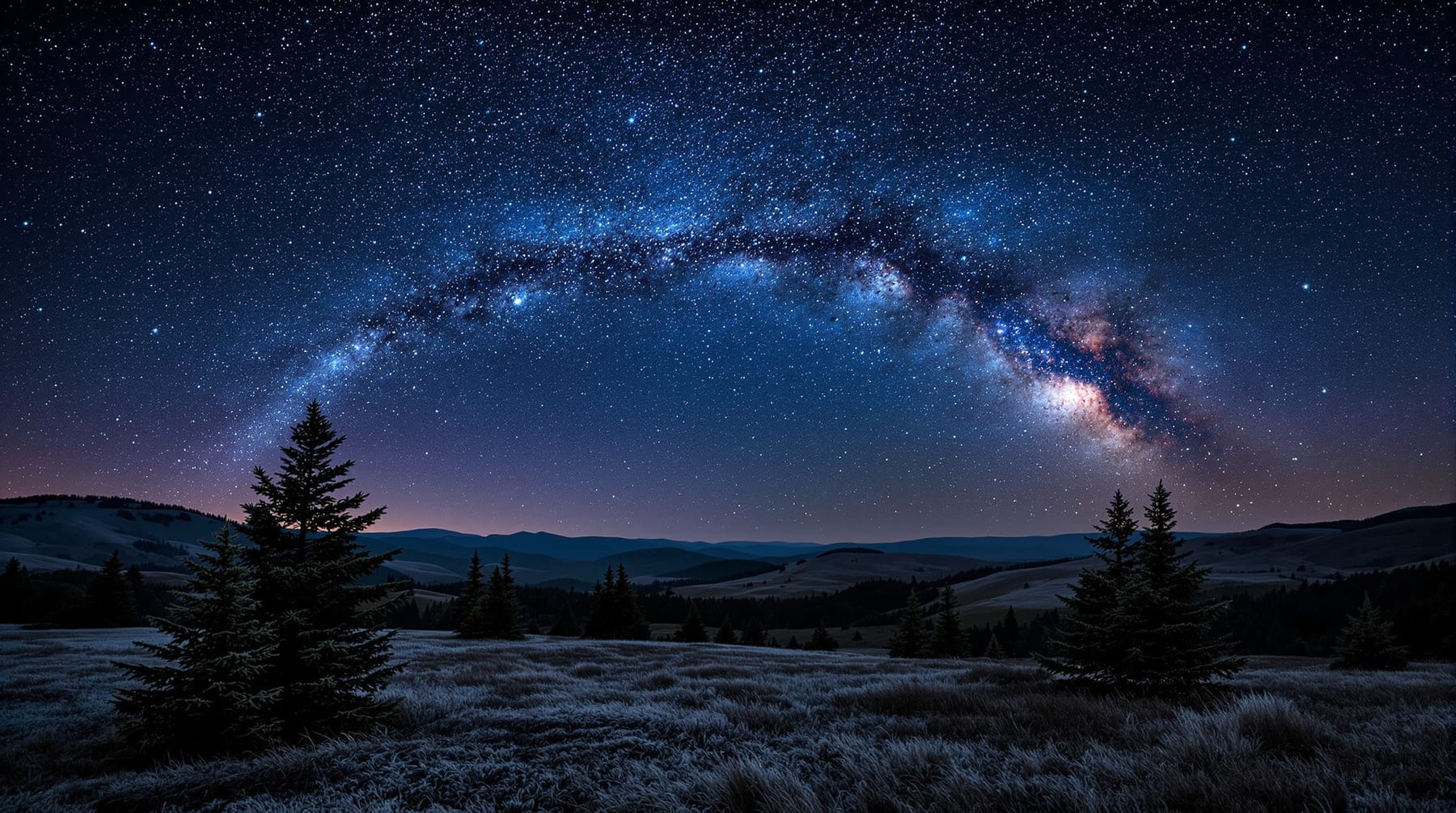
The practical geography of stargazing in southwest British Columbia is simple: darkness increases as you go east and up. The valley floor is a light-polluted corridor, the mountains on either side block a great deal of the sky but also block a great deal of other people's lighting, and the genuinely dark country begins once you are over the first range and onto the interior plateau. This page runs through the realistic options in order of driving time.
What makes a site good
Before the list, the criteria — because "dark" is only one of five things that matter, and rarely the one that decides whether a site is usable.
- Horizon profile. A moderately dark site with a low, open southern horizon will beat a darker site surrounded by trees for almost everything worth looking at, because objects culminate in the south and that is where they are highest and clearest.
- Terrain screening. A ridge between you and a town is worth more than twenty kilometres of extra distance from it.
- Elevation. Getting above the valley's low-level haze and inversion layers improves transparency dramatically, particularly on calm autumn and winter nights when cold air pools on the floor.
- Legitimate access. Somewhere you are entitled to be, after dark, without ambiguity. This constrains the list more than anything else.
- Level ground and a safe approach. Setting up a telescope in the dark on a slope, at the end of a rough road, in the rain, teaches you the value of this quickly.
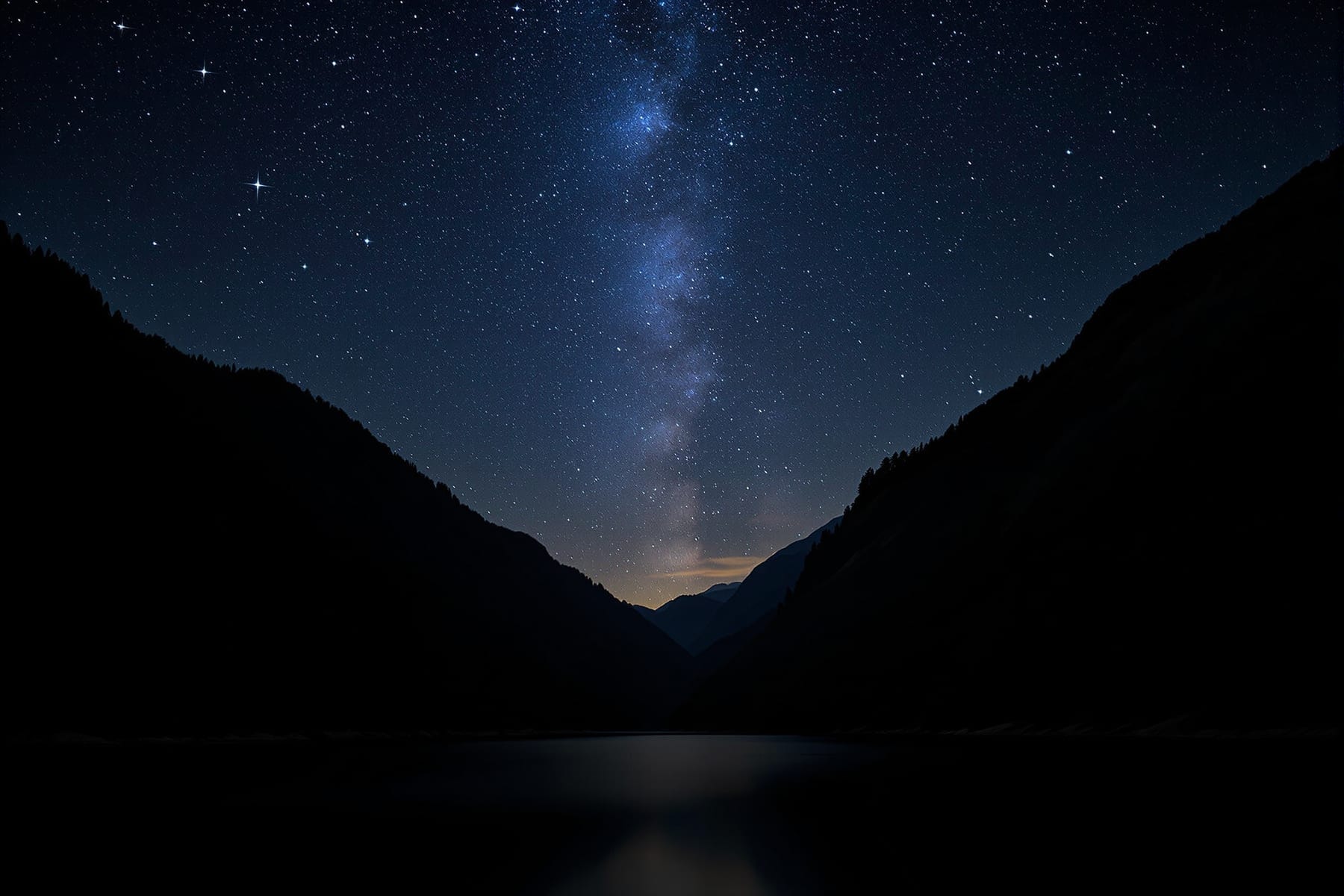
Within the valley
McDonald Park, Abbotsford
The valley's protected dark-sky site and the only one specifically managed with the night sky in mind. Ten to twelve minutes from Abbotsford, flat, accessible, with terrain screening on three sides and a good low southern exposure. It behaves like a class 4 sky on a good night. Access after dark is subject to municipal arrangements that change, so check before you go. Covered in detail on the McDonald Park page, with directions and field orientation on the getting there page.
The farmland benches and dyke roads
The valley's agricultural land offers a great many places with a genuinely low horizon in every direction, which is a rarer commodity here than raw darkness. The sky is not dark — expect class 5 — but for the Moon, planets, double stars, bright clusters, meteor showers and aurora, horizon is worth more than darkness. The absolute requirement is that you park somewhere legitimate and do not block field access or gateways; this is working land and a telescope on the shoulder of a farm road at midnight is an unwelcome surprise to whoever needs to get a tractor through.
Chilliwack Lake
Roughly an hour from Chilliwack up the Chilliwack River valley, and a meaningful step darker than anything on the valley floor because the surrounding mountains screen essentially everything. The trade is a badly restricted horizon: you are at the bottom of a deep valley, and large parts of the sky are simply behind rock. Excellent for zenith work and the overhead Milky Way, poor for anything low. Provincial park facilities and campgrounds in the area operate seasonally; check current status with BC Parks before relying on them.
Two to three hours: over the first range
The Manning Park corridor
Two and a half to three hours east along Highway 3, and the first genuinely dark sky most valley observers reach. The park sits high — the highway summit is above 1,300 metres — the air is dry compared with the coast, and there is nothing of consequence to the east for a long way. Several of the high viewpoints and open subalpine areas along the corridor give both darkness and horizon, which is the combination the valley cannot supply.
The practical cautions are real. It is a mountain highway with genuine winter conditions from October to April, wildlife on the road at night is routine, and mobile coverage is patchy to absent along long stretches. Facilities, road status and seasonal closures should be checked with BC Parks and the provincial highway conditions service before setting out.
The Kane Valley and Loon Lake plateau, near Merritt
Roughly two and a half to three hours from the valley by way of the Coquihalla, and the best combination of dark sky and open horizon within a comfortable drive. The country south of Merritt is high rolling plateau at around 1,100 to 1,200 metres, well east of the coastal weather, with wide grassland and forest openings and very little permanent lighting anywhere. On a good night this is class 2 to 3 sky with a horizon to match, and the difference from the valley floor is not incremental — it is a different hobby.
Two warnings, both of which catch people out. The first is cold. At that elevation the temperature at three in the morning bears no relationship to the afternoon high, and it can drop to freezing in mid-August after a day in the thirties. Winter clothing in summer is not an exaggeration: insulated boots, a serious jacket, hat and gloves, and considerably more than you think you need. Hypothermia at a summer star site is a genuine and regular occurrence. The second is that this is working forest and range land with an active road network, so pay attention to whether a road is a public forest service road or a private or industrial one, and never block a road or a gate. Kentucky-Alleyne Park lies in the same general area and provides the only formal recreation facilities nearby.
Further afield
Beyond three hours the options open out considerably — the Okanagan highlands, the Nicola and Thompson plateaus, the Cariboo. All of it is darker than anything closer, and all of it involves a level of commitment that turns an evening into a trip. The realistic pattern for most valley observers is to work the local sites through the year and make two or three expeditions east in the good months.
Going somewhere unfamiliar at night
A few habits worth having, none of which are specific to astronomy and all of which get ignored.
- Scout in daylight. Arrive before sunset the first time you use a site. You will find out about the slope, the gate, the treeline and the neighbours while you can still see them.
- Tell someone where you are going and when you expect to be back. Mobile coverage on the plateau and in the mountain corridors is unreliable at best.
- Carry more than you need. Fuel, water, food, blankets, a first aid kit and a means of self-recovery. A cold night in a stuck vehicle a long way up a forest road is a serious situation.
- Check the weather and the road, not just the cloud. Environment Canada's forecasts cover the mountain passes separately from the valley for good reason.
- Leave nothing. Sites survive on tolerance. One bad visitor closes a spot for everyone.
Before any of this, check whether it is going to be clear at all — see reading the forecast, which explains the astronomical cloud, transparency and seeing products that exist specifically for this problem.