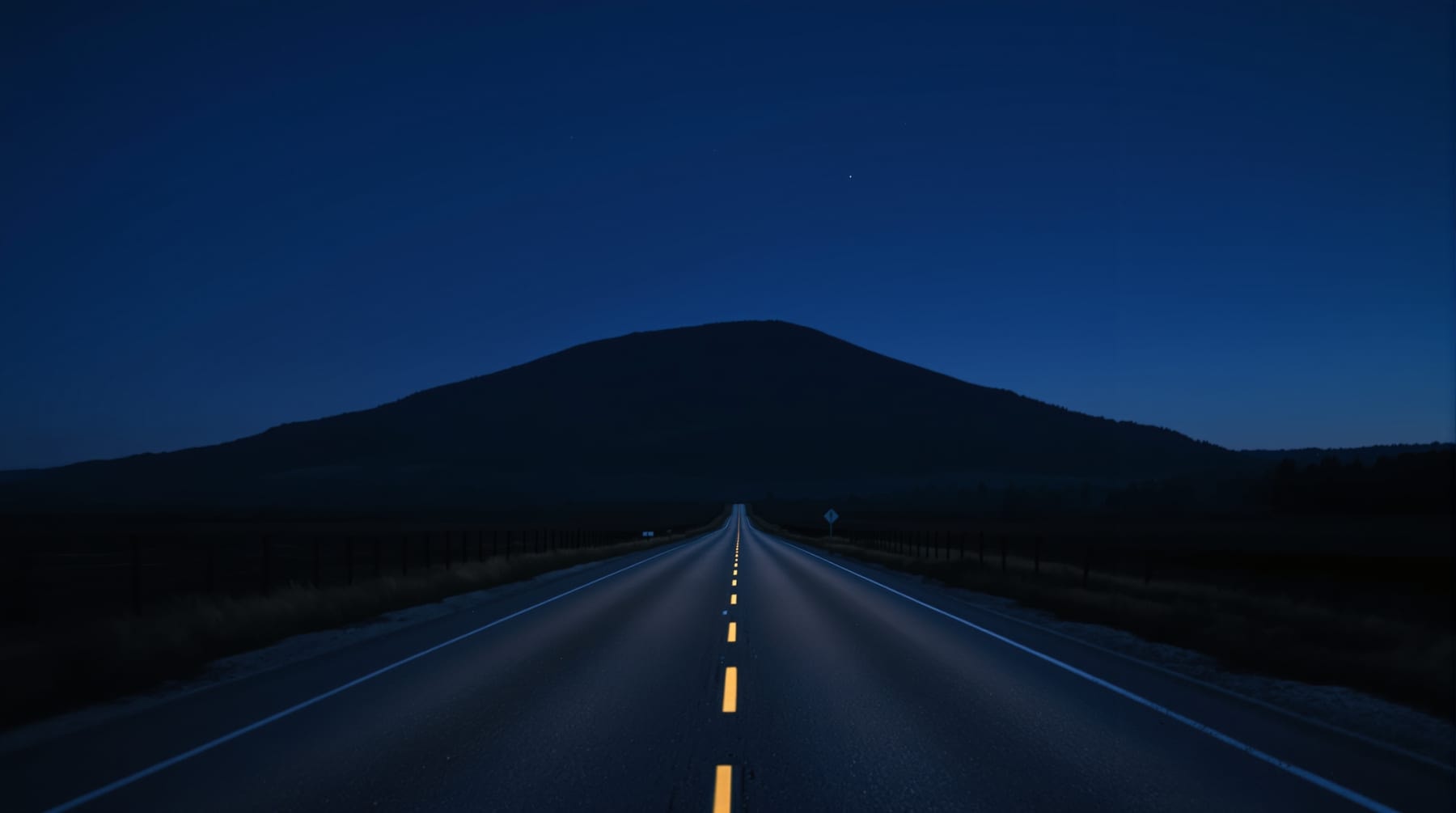
McDonald Park sits off No. 3 Road in Abbotsford, British Columbia, on the western flank of Sumas Mountain and close to the Highway 1 corridor. It is roughly ten to twelve minutes from central Abbotsford and comfortably under an hour from most of the eastern Lower Mainland outside rush hour. This page covers the approach, what to expect when you arrive, and how the observing field is oriented — which matters more than it sounds if you are planning what to look at before you leave the house.
The approach
The park is reached from No. 3 Road, which runs north from the Highway 1 corridor into the farmland at the base of the mountain. Coming from the west along Highway 1 you leave the highway at the No. 3 Road interchange; coming from Chilliwack in the east you do the same from the opposite direction. The final approach is on paved rural road through agricultural land, with the mountain rising ahead of you and on your right.
Two practical warnings about the drive. The first is that farm traffic and wildlife both use these roads at night, and the roads are unlit by design — that is the point of the site. Drive as though something will step out, because periodically something does. The second is that satellite navigation is not always reliable this close to a mountain in a rural grid where several roads carry numbers rather than names. Look at a map before you go and know roughly which turning you are after; the reception on the flank of the mountain is patchy.
When you arrive
Abbotsford's municipal parks are day-use facilities. What that means in practice for an evening visit is not something this guide can state as a general rule, because arrangements change and have historically been specific rather than blanket. Check current access with the City of Abbotsford before you plan a night there, and do not assume that a gate open at dusk will be open at two in the morning.
Assuming you are there legitimately, a few habits make the arrival painless:
- Reverse into your parking spot. When you leave, your headlights then point away from everyone else's dark adaptation rather than sweeping across it.
- Kill the interior light before you open the door. Most cars let you switch the dome light to permanently off. Do it in the driveway at home, not in the dark with your hands full.
- Set up in daylight if you can. Arriving before sunset costs nothing, gives you a look at the horizon profile, and means you are collimating and balancing in comfort rather than by feel.
- Take your rubbish home. The bins are for the day-use crowd and they are not emptied at midnight.
Orientation of the observing field
The main field is flat and open, and the useful thing to understand about it is the horizon profile. The mountain is east and behind. That is a mixed blessing: it screens the Chilliwack light dome almost entirely, but it also takes a substantial bite out of the low eastern sky, so objects rising in the east are not usable until they have climbed a fair way.
The good exposure is the arc from south-east through south to west, over farmland. That is the arc you want. Everything culminates on the meridian due south, so the field's best sky is also its highest sky, which is a happier accident than it sounds. It also means:
- Summer Milky Way work is well served. Cygnus, Aquila and Scutum ride up through the southern arc and pass close to the zenith. The Sagittarius region low in the south is compromised by both atmosphere and the border glow, but it is at least in the open.
- Planetary observing is well served. The ecliptic crosses the southern arc, so planets are in the clear part of the sky when they are highest.
- Aurora watching is not. The northern horizon is the weaker direction here, both because of terrain and because a low northern display needs a clean sightline. If aurora is your target, the aurora page discusses better-suited locations.
- Deep-southern objects are effectively out of reach. Anything below about declination minus 35 degrees is either skimming the horizon murk or never rising at all from 49 degrees north.
What to take
The valley floor is humid, and clear nights are radiative nights, which means the temperature falls quickly and everything you own gets wet. The single most useful thing you can bring, after warm clothing, is a strategy for dew: a dew shield, a low-power heater strip, and a cover for equipment sitting idle. A folding chair matters more than beginners expect — standing at an eyepiece for two hours is miserable, and seated observing genuinely reveals more detail because you are steadier.
Beyond that: a red torch and no white one; a printed or offline star chart, because your phone will not survive four hours in the cold; something hot to drink; and considerably more insulation than the daytime temperature suggests. A calm clear October night in the valley can be twelve degrees warmer at four in the afternoon than it is at two in the morning.
For what to point all of it at, see the seasonal sky guide, and check the cloud and transparency outlook first — reading the forecast explains how. For the site itself and the story behind its dark sky, see the McDonald Park page.